

 Nov 07, 2025
 3 min read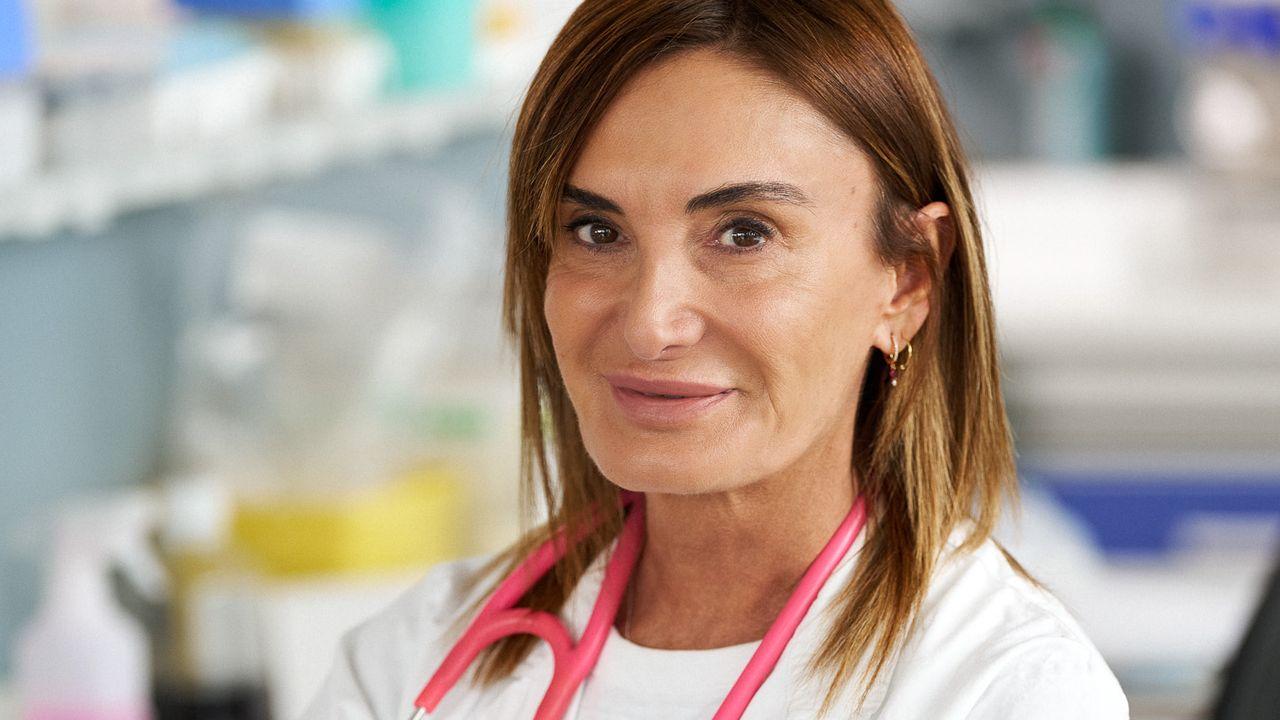
Researchers are funded by the URIR project to identify biomarkers
Among the different forms of breast cancer, the so-called "triple negative" represents one of the most aggressive and difficult cases.It affects 8,000 women every year in Italy, especially in Italy, where the Italian tumor registry (Airtum) is present in about 15% of all cases of breast cancer.
Triple-negative breast cancer gets its name because most of its cells do not express 3 proteins found in other types of breast cancer: estrogen receptors, progesterone receptors and epithelial growth factor HER-2, which is not present in this tumor.
Among the most common treatments for breast cancer are targeted therapies that use these proteins as targets, which is why, a few years ago, treatment options for triple-negative breast cancer were limited to chemotherapy.
Today, the new standards have led to rapid recovery and give these patients hope, if only in the form of activity.Abolished in combination with chemotherapy, especially usually that which causes movement of activity.
The new research aims now to identify suitable biocenters that will allow us to identify those patients who are most likely to respond to immunotherapy."Alessandra Gennari" Oncologist and "Alessandra Gennari" from the University of Novara, "Alessandra Gennari" from the University of Novara, "Alessandra Gennari" from the University of Novara, is carrying out a research project with Airc with the best experience in triple negative breast cancer.
"Therapies work, but not all patients respond to them. We therefore need to understand if there are biomarkers that predict the response to these therapies, so that other strategies can be used in patients who will not respond," explains the researcher."There is also a very interesting drug, already used in clinical practice and for which we have positive data also for its earlier use in the treatment of these patients: that is Sacituzumab govitecan, which, alone or in combination with immunotherapy, allows us to further improve survival.
Can you give an example of monitoring potential biomarkers?
"Latent biology, particularly the pd-l1 protein."It has already been used in clinical practice with positive results, and long-term results can be seen even after showing positive results.
What are you looking for now?
"We are conducting a project funded by the AIRC, which lasted for 5 years, where my team and I aimed to identify biomarkers capable of identifying patients who respond positively to treatment with immunotherapy in triple-negative breast cancer. In particular, we went to study some biomarkers that include circulating lymphocytes, as well as measuring microbes and other microbes in the blood. The project of samples and tumor tissue is nearing completion, but the patientAdmission will be released soon.
Why did you choose to focus your oncology on breast cancer?
"I was passionate about this disease when I - still an artist - joined a group that works on breast cancer.And because I want to help women who have left a little outside.If we look at all the research around the world, women are the least represented in clinical trials.Finally, because breast cancer is a neoplasm of social importance: about 2 women in 10 have the possibility of developing breast cancer during their lifetime."
What are your tips for prevention?
« Certainly compliance with mammography screening programs, unfortunately the compliance rate in Italy is still very low: we reach around 60% and even if it increases in the north it is still very low.
From the patients you mentioned, did you understand why so many women were not covered?
«In general, because people do not pay attention to the signs of their body.And so they probably don't believe that screening helps to cure breast cancer, which is true.Therefore, in fact, they underestimate its importance.Therefore this campaign continues and now some universities will also start, he said.
How exactly will they work?
"Some universities, including mine, have joined the Federation of University Sports certification program, which also includes health-related standards, such as the prevention of female cancers in women. This affects not only female students, but also faculty and administrative staff. So, if it is familiar, we will bring LILT within the university to encourage moments of meetings and awareness of mammography, ultrasound-focus and B-testing, focus on mammography and B-testing. spaces and screening will ensure thatsensitive students export the idea to their families and the communities in which they live.
Chocolates will support the work of 5,400 researchers (and their health)
Meet on Saturday November 8, in approximately 2,400 squares and schools to distribute chocolate, 200 grams of chocolate chocolate, for a minimum donation of 15 euros.Objective: to collect funds for the work of meteorologists 5,400 people.
Microscopes, slides, reagents, ampoules, gloves, pipettes and goggles are just some of the tools AIRC-supported scientists use: even a packet of research chocolates can help speed up research, bringing new essential resources into the laboratory.
An initiative that is good for you twice: for research and for health.Dark chocolate, consumed in moderation, is actually a valuable ally for well-being.As several studies have shown, cocoa is a good source of flavonoids, molecules with antioxidant and anti-inflammatory properties that offer potential positive health effects.
Along with the chocolates, a special guide will be provided on the goals achieved by AIRC as part of its 60-year commitment to support the best in cancer research. The chocolates will also be available directly at home at branches of AIRC's institutional partner Banco BPM from November 10 and on Amazon throughout the month.