

 Nov 09, 2025
 3 min read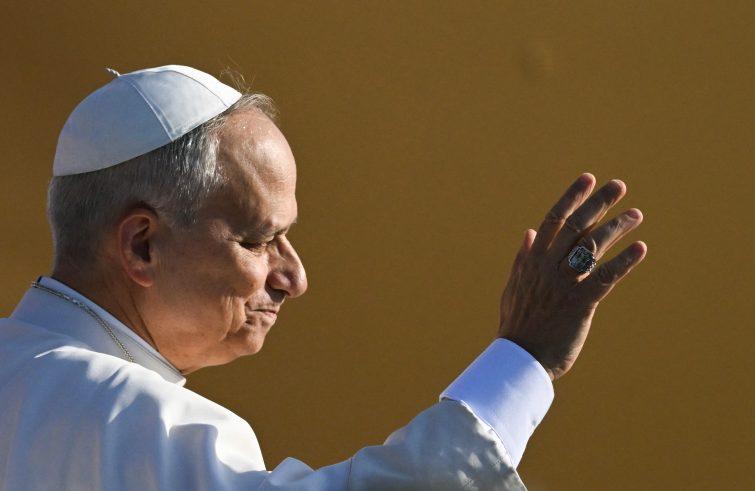
In a few months, Lalo XIV outlined the cake and guide of the builder, based on the influence to the process and treating people.Every word, every gesture, every choice responds to a clear plan, where the vision is not dominated, but direct.It is a mystery that speaks without cleffare, which produces trust and strengthens the Church's Brotherhood.
In a few months, Leo XIV represented a vigorous and coherent guide, characterized by the use of process and care for process.Every word, every gesture, every choice responds to a clear plan, where the vision does not dominate, but directs.It is the Magisterium that speaks without fanfare, that creates confidence and strengthens the unity of the church.
The first axis is the government.More than ninety supply of bishops in six months does not tell about a race, but about a plan.The positions reach territorial blocs: Asia as a site of growth, with four Syro-Malabar Provinces and the new Chinese diocese of Zhangjiakou;America as a pastoral and social field, with new coverage in Mexico and Brazil;Europe as a management laboratory, with personal Bishops' unions and translations in France, Poland and Belgium;Africa as a breeding ground, from Madagascar to Mozambique, from Kenya to the Ivory Coast.The principle is the same everywhere: don't fill offices, but embrace the communities.Major diocesan bishops, the mark of the Church who give pastoral guidance to people rooted in concrete life, trained in listening and communication.In this context, the appointment of Msgr. It is particularly important.Filippo Ianone, Carmelite, as rector of the Dicastery for bishops: the religious leader of the main body of the Roman Curia, a sign of the desire to bring together spiritual understanding and pastoral intensity, reflection and government.It is a choice that focuses on the method, the quality of the positions and the value of the structure.
But behind this apparent harmony we can also see problems.The Church lives in a time of internal and external tensions: the struggle to combine tradition and innovation, synod and college, mission and institutional prudence are intertwined with the wounds of the world.From the conflicts in Ukraine and the Middle East to the crisis in the Sahel, from the drama in Haiti to the violence that is tearing the Congo, Leo.Even the dynamics of the church are still complex: the perception of unity, the relationship with the Churches of the East, the diplomacy of dialogue in contexts where civil recognition is not self-evident.The Pope does not eliminate these difficulties: he recognizes them as part of evangelical realism, which does not seek a Church without contradictions, but which can live without fear.
The second axis is the Magisterium.The entire pontificate of Leo XIV shows the word that guides, organizes and accompanies: a network of meanings that are recalled.In Delexi, love for the poor becomes the principle of reform and the key to understanding the Gospel.It is a teaching that descends into the flesh of the world, where "in the wounded face of the poor we imprint the suffering of the innocent and, therefore, the suffering of Christ."We find.Education becomes a concrete path of love, drawing a new map of hope in the Letter: "Education is a hope and a passion that is renewed because it shows the promise that humanity sees in the future."It is a vision that unites compassion and culture, pastoral care and thought, and which returns the Magisterium to its highest function: the formation of consciences and the guidance of history.Reflections on artificial intelligence are placed in the same perspective: "The decisive issue is not the technology, but how we use it."Not condemnation, but discernment: the search for the ethical and human application of innovation as a new spiritual frontier.
A wide audience confirms this consistency.The cycle "Jesus Christ Our Hope" continues and deepens the catechumenal path, with concrete and symbolic language.For Leo XIV, hope is not an emotion but a spiritual architecture.And the daily building of the church—with the signs of decisions, meetings, and communion—becomes the visible form of this theology in action.Leo XIV is most welcome in Rome by Cardinal Baldassare Reina and the Cardinal Prefects Victor Manuel Fernández, Michael Cherny, Luis Antonio Tegle and Giordano Picchinotti.They are the faces that regularly return to the calendar of hearings and confirm a model of governance that favors the continuity of dialogue rather than the speed of decisions.
Sufficient is the pontificate of Leo XIV.Amid reforms and protests, visions and conflicts, the Church's contribution grows.After the first six months, the direction seems clear: a quiet church, thoughtful, communicative, able to live in complexity without fear.Institutional theology of hope, in which Christ lives in the middle, the poor establish a rule, a method, a style and structure of communion.Leo XIV. It does not change the Church: it encourages it and helps it.