

 Dec 08, 2025
 3 min read
The question that dominates the public, political and economic debate is simple and direct: Can AI be augmented?
The question dominating public, political and economic debate is simple and straightforward: Will artificial intelligence actually increase productivity?
The narrative of the last two years bears witness to this.Digital assistants that write code, intelligent agents that analyze data, increasingly sophisticated automation: everything indicates that we are experiencing a new industrial revolution.
However, when we move from rhetoric to real numbers.The answer will be much less exciting, says the report "The State of AI in Business 2025" by research team Mit Nanda (Decentralized Networks and AI), which is now being cited everywhere.It shows that 95 percent of business projects using AI do not produce measurable economic results.It's a fact that contradicts the image of powerful AI and forces us to look beyond our enthusiasm.Today's productivity isn't increasing because of AI, and the reason isn't in technology.But it is an uncomfortable truth that concerns us, companies, and even giants developing AI.
The first is the huge gap between the advancement of technology and the slowness of organizations.AI will move, but business will not.Many companies adopt AI tools hoping for immediate impact, but instead graft them on outdated processes, cluttered data, and redundant infrastructure.It's like putting a Formula 1 engine in an old panda: it doesn't work.The only area where AI has produced real results is in software development, where coding assistants are actually doing the work.30% to 50% reduction.But software development is a purely digital world, with no physical limitations, legacy processes, or rules to follow.In other areas of the economy, AI still has untapped potential.
The second fact that is not appropriate is the fact that it forces the limits of the large types of reproduction.They are amazing in terms of nature, the generation of the Moor, and nature, but they speak little about the language of the real economy.They are not trained in industrial processes, clinical procedures, administrative measures, logistical protocols.eGDP.Nurses, maintenance specialists, administrative staff, warehouse workers, teachers: They are the heart of the economy.And they need different types, available, trained on company data and integrated in the specific process.Generalist Ai is comprehensive, but productivity comes from specialists.
The third is the worst: Cutting workers does not increase productivity.For it will decrease in the middle term.Especially in the United States of America, especially in the United States, there has been a complete justification for the fast sheets.I agree.If AI is only used to reduce costs, the result is evolution: compression.Real production is increased by human power, not removed.
Then there's a fourth inconvenient fact, perhaps the most important and least discussed: AI is advancing at a pace that even the biggest players can't keep up with.Microsoft, Google, Meta and OpenAI continue to release services, agents, models and tools at a pace that does not allow for stability.The case of Microsoft is an example.In recent months, it released tools to develop common agents to include in Microsoft 365, then modified the architecture, some services in September were removed, changed it again in November, changed the licensing parameters and changed data management again.The name "Copilot" remained, but everything surrounding the creation of intelligent agents is available again.
This is aware of an unknown of the fact that requires the business to make a route of the course of food, for this time the things that are in order for occasions?When do you need to be judged.
So, to return to the first question "does AI really increase productivity?".The answer today is negative not because AI can't do it, but because we haven't yet built the conditions for it to happen.Without solid data infrastructure, without direct models trained in the real economy, without processes fundamentally rethought, and without more sustainability in the technology offering, AI is not a lever for transformation: it is an improved machine.
But all this can change.And so on.If we stop chasing AI as a game and start catching up and making it productive, if we use it to drive productivity even further.
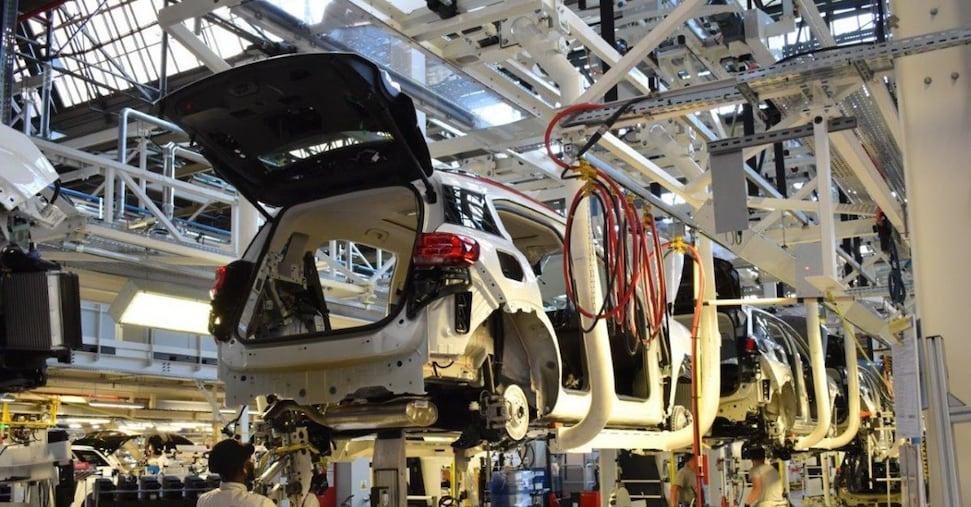
The change will not come from social networks, but from factories, offices, hospitals and supply chains.This is where the real game is.Then we will see how AI will truly define new industries.