

 Oct 27, 2025
 3 min read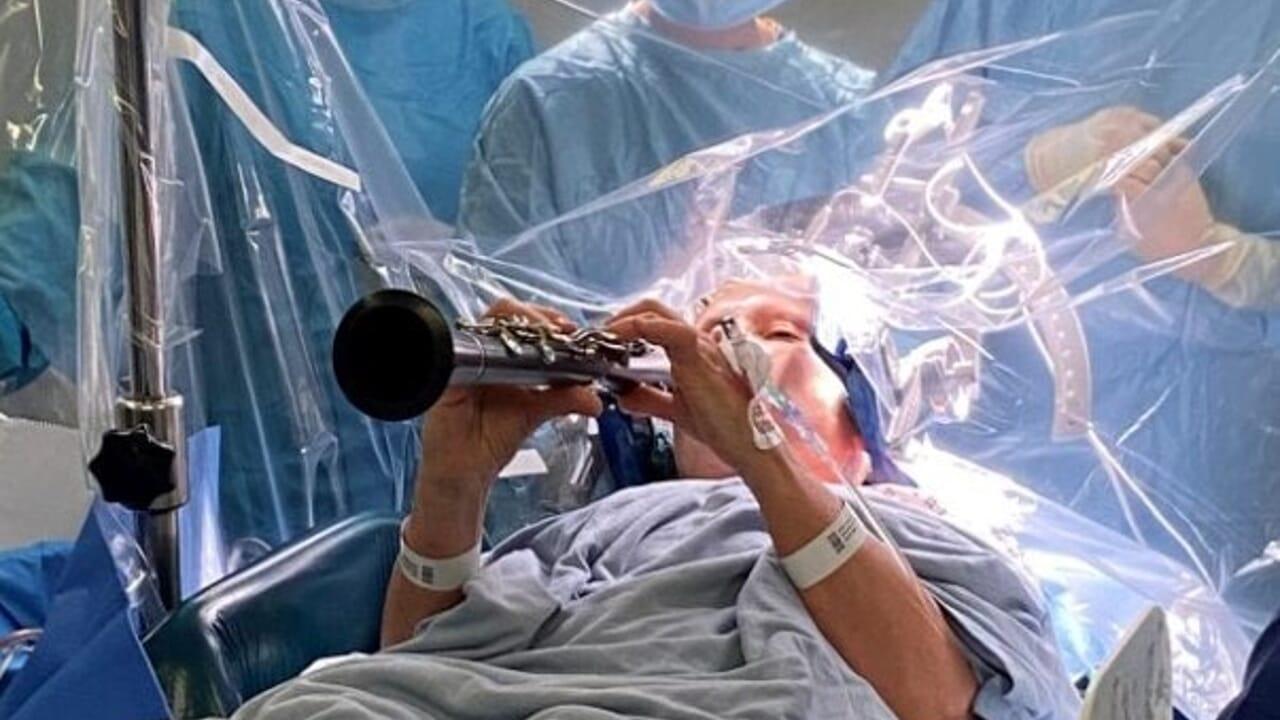
The disease is giving up the disease of French replying immediately in the depths.
VIDEO OF THE DAY
Salma concert in Rome: video, setlist and special guests
Playing with brain surgery five times: This is how to deny the acquired movement again
A patient with Parkinson's disease responded by immediately stimulating the brain to restore movement in his fingers
In an operating room at London College Hospital, a critical brain operation was accompanied by a playing clarinet.It was himself during the procedure: Dennis Banton: 65, the former certainty of the fiery speaker of the browbouge, Ist from Parkinson's disease.As his celebration, his fingers were working (as far as the sound shows) that motivational therapists used deep brain stimulation (DBS), one of the most advanced treatments for obsessive-compulsive disorder.
Dennis was diagnosed with Parkinson in 2014. Over the years the disease increasingly increasingly affected her ability to go, swim, dance and play cleeted five years ago due to stiffness in her hands."As a sharp clarnetist - the doctors explains - we suggested that Denise bring her clarinet in the operating theater and see if this would improve her hands and therefore" we are very happy to see direct effect on his ability to play. "
Surgery with abdominal heart
L’intervento è durato circa quattro ore, durante le quali Denise è rimasta completamente sveglia, protetta soltanto da un’anestesia locale che ha intorpidito cuoio capelluto e cranio. I chirurghi hanno praticato due minuscoli fori nel cranio - grandi circa quanto mezza moneta da cinque penny - per inserire con estrema precisione gli elettrodi nel tessuto cerebrale. “Utilizziamo un sistema di coordinate tridimensionali che funziona come un navigatore satellitare - ha spiegato il professor Keyoumars Ashkan, neurochirurgo che ha guidato l’équipe del King’s College Hospital -. Ci permette di raggiungere i nuclei profondi del cervello coinvolti nel controllo del movimento". Quando la corrente elettrica è stata attivata, le mani di Denise hanno reagito immediatamente. “Ricordo che la mia mano destra riusciva a muoversi con molta più facilità dopo aver applicato la stimolazione, e questo a sua volta ha migliorato la mia capacità di suonare il clarinetto, cosa di cui ero molto felice”, ha raccontato la paziente.
Article: first clinical trial of neuron transplantation for parkin treatment
What is Deep Brain Stimulation (DBS)?
Deep brain stimulation (DBS) is a neurosurgical procedure that involves implanting electrodes in specific areas of the brain.These send controlled electrical impulses that can modulate the abnormal nerve activity that causes Parkinson's motor symptoms, such as tremors, slowness, and muscle stiffness.Impulses are generated by a nerve stimulator, a small pacemaker implanted in the patient's chest and connected to electrodes via thin wires.The system can be programmed and adjusted over time, even remotely, to adapt to patient needs.
How DBS treats Parkinson's disease
In Parkinson's disease, the gradual loss of nerve cells in the substantia nigra, the area of the brain that produces dopamine, alters the balance of the circuits that control movement.DBS does not "cure" the disease, but partially restores the proper functioning of these circuits by acting as an internal "metronome" that synchronizes neural signals and reduces tremors and slowness of movement.The procedure is for advanced patients when dopaminergic drugs (such as levodopa) no longer control symptoms sufficiently or cause serious side effects.According to the National Institute for Health and Care Excellence (NICE), 10-15 per cent of Parkinson's patients can be operated on.
Article: First clinical trial begins in neuron transplantation to treat Parkinson's disease
Risks and benefits
Like any brain exercise, Dbs has risks—such as infection or bleeding—although these events are rare (less than 2% to 2% to 3% to 2% to 3% of cases).The benefits, however, are often long-term: reduced damage and stiffness, improved behavior and speed of movement, and reduced need for medications.New technologies, such as organized transportation and loading factories, enable more precise and personalized skills and improve the quality of the poor and improve the quality of patients.
Revival of power
Denise pork, the result caused a miracle: today, with a reusable stimulus - which will last up to 20 years - Denise can move freely again.She walks, swims and starts playing at Cintead's Place again.
New frontiers in neurology
"Deep brain stimulation is one of the best and evidence-based treatments to check the symptoms of Parkinson - Ashkan stressed, and greatly improving the quality of life of our patients.Catherine Fletcher -.Our goal is to continue to improve these technologies, until Parkinson's is a manageable disease, and one day - we hope - ".
Watch Dennis play the clarinet during surgery