


 Dec 28, 2025
 3 min read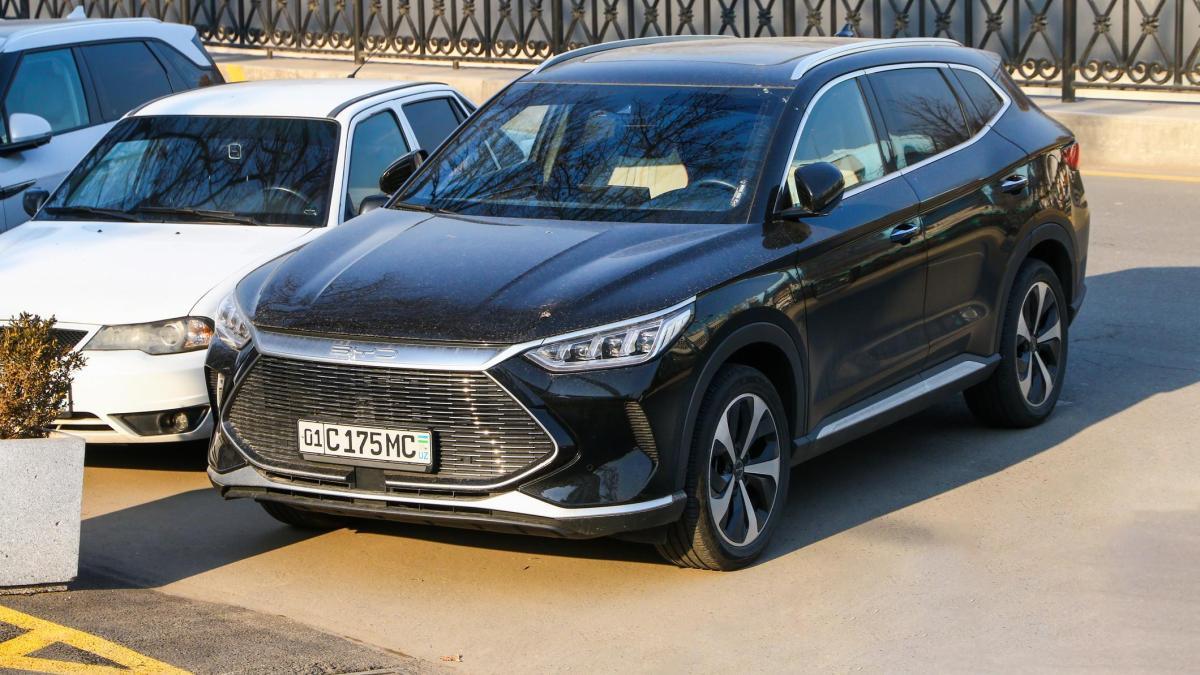
Between industry opportunities and risks, BYD, Geely and SAIC's expansion in Central Asia has been configured as a test bed for the People's Republic of China's ability to transform the region into a strategic point for its automotive value chain.
Among the industry's opportunities and risks, the expansion of BYD, Geely and SAIC in Central Asia has been shaped as a test of the People's Republic of China's ability to transform the region into a strategic location for the automotive value chain.
Over the years, the Central Asian automotive market has become a hub for Chinese manufacturers thanks to the independent location of this infrastructure network, which reduces trade barriers and facilitates export, assembly and assembly production.The subject of the article is the structure and growth potential of the Central Asian automobile market to the extent that it explains the opportunities, limitations and risks of Chinese manufacturers.
1 Key points
-The layout of BYD, Geely, and SAIC in Central Asia can be summarized into three major factors.
- In Central Asia, Chinese brands can strengthen their presence in the general sector, where European competition is limited, while BMW, Mercedes and Audi-Porsche hold 84% of the premium and luxury market, reinforcing the leading position of Western manufacturers.
- President Xi Jinping is strategically considering the automotive and energy sectors to strengthen China's presence in Central Asia, reduce the influence of the Russian Federation and curb the influence of the Republic of India.
- The expansion of BYD, SAIC and Geely in Central Asia remains subject to security risks, including terrorism and political instability, which could slow down China's industrial strategy.
2 Car markets in Central Asia
“In recent years, the Central Asian automotive market has recorded steady growth, also aided by foreign direct investment from Chinese automakers, which has helped expand production and boost domestic demand.In 2023, sales of new cars in Kazakhstan will reach approximately 200,000 units, showing growth compared to previous years.Meanwhile, 207,616 vehicles were registered in November 2025, bringing the total vehicle fleet to over 5.8 million. Uzbekistan is establishing itself as an important hub for the regional automotive industry, with an estimated 424,800 vehicles produced in 2024, with the domestic market share largely concentrated in state-owned UzAuto Motors.China, Japan and South Korea.
The structure of the Middle Asia automotive market depends on the price of cars, and its average age is 10 to 15 years.Demand focuses on small cars, prudent sedations and light commercial vehicles, and conditions are favorable for expanding Chinese brands, which currently accounts for nearly 40% of total sales.In Kazakhstan, during the first nine months of 2025, Chinese brands accounted for about 34.5%of the automotive market, characterized by the dominance of gasoline engines (82.1%), followed by diesel (7.6%), gas (7.1%), mixed fuel (2.7%) and electricity (0.2%).
3 Law
- The expansion of the car market in Central Asia was supported by targeted government policies.In Kazakhstan, the "Concept for the Development of Transport and Logistics Capacity of the Republic of Kazakhstan until 2030" (approved on December 30, 2022) promotes electric mobility and the creation of a good network of car charging infrastructure, providing favorable conditions for the entry and development of Chinese manufacturers in the region.Uzbekistan's electric transport strategy is divided into two main projects:
- The Green Economy Strategy 2019–2030 promotes energy efficiency, with the aim of reducing pollution and developing a sustainable infrastructure and transport system, with a focus on electric vehicles (cars and trains).
- The concept of environmental protection until 2030 sets sectoral targets for decarbonisation and reduction of transport emissions, as well as increasing the penetration of electric vehicles and transport, as happened in Tashkent and Samarkand.
In Tajikistan, the e-Transport Development Program for the period 2023-2028 has been launched, which sets specific goals for the electrification of public transport and taxi fleets;while Turkmenistan has yet to set a formal industry or e-transportation strategy with a horizon of 2030. Overall, Central Asia's legislative framework for regulating the automotive sector reflects the development of individual countries' national automotive markets, with Kazakhstan and Uzbekistan facing a weaker regulatory situation than other technologically advanced countries.
4 Investments by Chinese companies
- Since 2013, Chinese investment in the automotive sector in Central Asia has marked a transition from exports to local production, driven by increased demand, positive industrial policies and the need to diversify the European and American markets.In this context, BYD, Geely and Saic Motor tried to define a new industrial partnership with Uzbekistan and Kazakhstan.In December 2022, the Chinese company and the UzAuto Motors group established the BYD Uzbekistan plant, active since June 2024 and dedicated to the production of plug-in hybrid and electric cars.The plant is designed to handle about 50,000 vehicles a year, which could increase production to 200,000-300,000, establishing Uzbekistan as a major production and export center.In Kazakhstan, BYD's best-selling models are Han EV, Song Plus EV and Song Plus DM-i, while in Kyrgyzstan, Tajikistan and Turkmenistan they are on sale, with no company announced until the end of 2025.
In recent years, Geely Auto has pursued an additional strategy in Central Asia, to expand its sales network, before starting to build a factory with Orbis Kazakhstan in 2025 in Almaty (Kazakhstan), for an estimated investment of 100 billion KZT (200-220 million USD) and until the product, which is expected between 2026-2026 high Coolray and will be returnedcarefully between 2027-2026 Coolray.and Emgrand, in line with Kazakhstan's policy of reducing imports and balancing supply.Instead, SAIC Motors adopted a distribution strategy, using MG and Maxus brands and relying on business networks in Kazakhstan and Uzbekistan.This plan reflects the company's global strategy: in 2023-2024 it sold more than 1 million cars in foreign markets, with one percent.Byd, Saic Motor and Geely, focusing on targeted investments, intend to establish a hegemonic position in the Central Asian automotive market, isolating European manufacturers and limiting the entry of Indian manufacturers.
5 Risks and limitations of BYD, Geely and SAIC in Central Asia
—Central Asia offers increasing opportunities for Chinese automotive companies, but also presents obstacles and risks that could limit the effectiveness of BYD, Geely, and Saic Motor programs.Among these we can mention:
- The driver shows the growth in both sides.The Indians try to be the most stylish, and most traditional segments, the other side of the pacums and ice cream.
- The Russian Federation sees the expansion of BYD, Geely and Saic Motor in Central Asia as a challenge to its influence in the region, linked to its Soviet heritage.Moscow has shown signs of political opposition to Chinese rule in the automotive sector with possible trade measures, special funds for Russian products and trying to maintain influence in joint ventures or regional distribution agreements.
——There are security risks such as terrorism and organized crime in Central Asia, especially in the border areas of Xinjiang, Tajikistan, and Kyrgyzstan.Such threats could jeopardize the safety of BYD and Geely's factories, logistics and personnel.
6 items to check
—The performance of the automobile market in Central Asia can be assessed by considering the following points.
- Future investments of Byd, Geely and Saic Motor and agreements, incentives and industrial partnerships with local governments.
- Development of gross domestic product (GDP) according to purchasing power parity (PPP) in individual countries and investments in public infrastructure, especially in relation to the electric vehicle sector and increased sales.
- Industrial security and protection policies aimed at protecting production centers and mitigating the risk of regional instability, including terrorism and local conflicts.
— Central Asia is positioned as a strategic market for BYD, Geely and SAIC, characterized by high growth potential, comprehensive logistics infrastructure and public policies favorable to electric vehicles.In the medium term, the region can develop from a simple direct sales market into a regional assembly platform suitable for China's industrial strategy, thereby strengthening China's influence on the Eurasian axis.However, geopolitical, competitive and security risks require a calibrated approach based on selective investment, local partnerships and risk mitigation strategies, supported by Chinese industrial and diplomatic coordination.